Summer Cactus Plant Coloring Pages
A Designer’s First Glance: Clean, Cheerful, and Quietly Confident
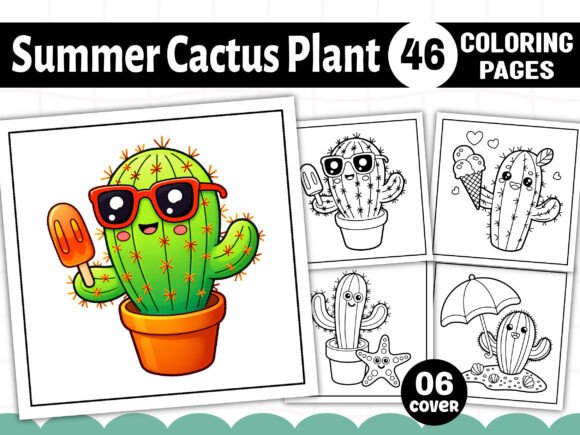
When I opened the Summer Cactus Plant Coloring Pages zip file, what struck me first wasn’t complexity—it was calm. These aren’t busy, over-rendered illustrations. They’re confident line drawings: rounded cacti with subtle spines, soft floral accents, and gentle negative space that breathes. The lines are consistent in weight—not too thin to disappear under stitching, not so thick they’ll drown in satin stitch or bleed on light fabric. As an embroidery designer who’s stitched everything from nursery pillows to boutique aprons, I immediately pictured this as a summer-ready embroidered tote bag—lightweight cotton canvas, off-white base, paired with sage green and terracotta thread. It feels like sunshine without shouting.
Where This Design Naturally Lives (and Thrives)
The Summer Cactus Plant Coloring Pages design set has a quiet versatility. It’s not trying to be everything—but it fits beautifully into several high-intent product categories:
- Personalized baby items: A single small cactus on a onesie or burp cloth reads sweet, gender-neutral, and modern—no fussy details to snag during diaper changes.
- Tote bags & tea towels: The open composition scales well. On a 6" x 8" towel corner or 4" x 5" tote pocket, it lands with clarity—not cramped, not lost.
- Embroidered patches: Clean outlines mean crisp edges when cut and fused. No micro-details that vanish at 2" scale.
- Nursery decor & pillow covers: The organic shape softens hard edges—perfect for linen pillow covers where you want texture *and* legibility.
- Etsy listings & craft fair merch: It photographs well flat or draped, and pairs easily with minimalist branding—think kraft tags, cream packaging, handwritten labels.
What You’ll Want to Watch For (Real Embroidery Realities)
This isn’t a “just hoop and go” design—and that’s okay. Its strength lies in intentionality, not automation. Here’s where attention pays off:
- Hoop size & placement: Most motifs sit comfortably in a 4"–5" hoop, but avoid cramming multiple cacti into tight spaces—stitch density builds quickly in clustered leaves or spines. Test spacing on scrap fabric first.
- Fabric texture matters: On heavy denim or textured terry, simplify spines to 2–3 key lines instead of dense clusters. On thin rayon or stretchy jersey? Use tear-away + cut-away stabilizer combo—those smooth curves need support.
- Dark fabric contrast: The line art is optimized for coloring pages—not direct embroidery. When digitizing, increase outline thickness slightly (0.3mm minimum) for visibility on charcoal or navy sweatshirts.
- Curved surfaces (caps, mugs, curved pillow seams): Avoid placing tall, narrow cacti across crown seams—they’ll distort. Wider, squat shapes hold up better.
- Wash durability: If stitching for baby clothes or kitchen towels, avoid ultra-fine interior linework. Stick to bolder outer contours and minimal interior detail—fewer stitches = less wear.
How It Shapes Your Finished Product—Beyond Just Looks
Using Summer Cactus Plant Coloring Pages doesn’t just add decoration—it quietly elevates perception. Customers notice handmade care in clean lines and balanced spacing. A well-executed cactus motif on a linen apron says “thoughtful, not trendy.” On a personalized gift, it feels intentional—not clip-art generic. That translates directly to trust: buyers pay more for pieces that look designed, not dropped in.
For Etsy sellers and small shop owners, this set supports brand consistency. Pair it with natural fiber listings, warm neutral palettes, and soft photography—and it reinforces a cohesive story. It also works beautifully in printable mockups: the line weight holds up in grayscale previews, so your digital product thumbnails read clearly even before a buyer clicks.
Practical Notes from My Embroidery Desk
Before stitching your first piece, here’s what I do—and recommend you do too:
- Test on scrap fabric that matches your final product (e.g., unbleached cotton for tea towels, French terry for sweatshirts).
- Check thread color contrast in natural light—not just screen light. Sage + cream reads softly; mustard + black reads bold.
- Review stitch density in your embroidery software. If fill areas feel heavy, reduce density by 10–15%—especially for baby items or lightweight apparel.
- Confirm hoop compatibility—some motifs may require repositioning for smaller hoops (3.5"). Don’t force a 5" design into a 4" hoop without adjusting spacing.
- Inspect small details at actual stitch size: tiny spines or flower centers may need simplification depending on your machine’s capability and fabric type.
- Mock it in black and white first—this reveals clarity issues no color preview will show.
- Use proper stabilizer: medium-weight cut-away for stable fabrics, tear-away + light cut-away for knits.
- Verify licensing before selling finished items or bundling as part of a digital embroidery file pack. Since this is marketed as a Coloring Pages graphic set, confirm whether commercial embroidery use is included—or if digitization rights are restricted.
Final Thought: A Design That Supports Your Craft, Not Competes With It
The Summer Cactus Plant Coloring Pages won’t wow with flash—but it delivers something rarer in embroidery work: reliability. It gives you room to choose thread, fabric, and finish without fighting the underlying structure. Whether you’re stitching a one-of-a-kind baby blanket or building a cohesive line of summer-themed custom apparel, this set behaves like a thoughtful collaborator—not a demanding client. It respects your time, your machine, and your customer’s expectations. And in the daily rhythm of running a craft business—where clarity, consistency, and calm matter most—that’s worth more than any extra flourish.