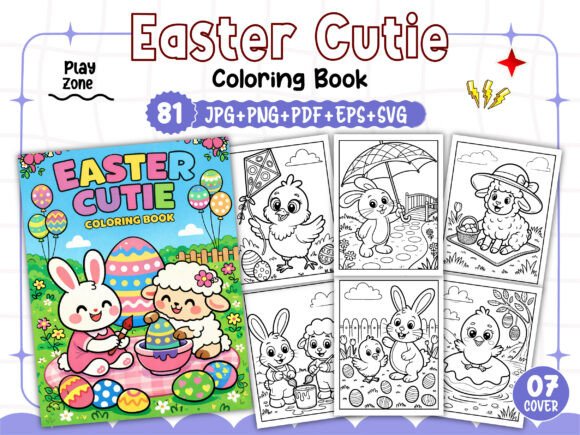
Easter Cutie Coloring Pages for Kids
A Designer’s First Glance: Whimsy That Fits Real Stitches
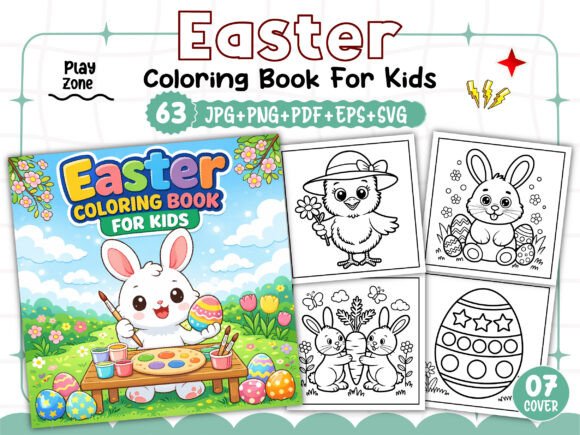
When I opened Easter Cutie Coloring Pages for Kids, my eye went straight to the line weight—not the bunnies or eggs, but how confidently those outlines hold shape. These aren’t scribbly doodles; they’re clean, purposeful contours with gentle curves and intentional spacing. As an embroidery designer who’s stitched hundreds of kids’ motifs, I immediately saw potential: this isn’t just a coloring page—it’s a ready-made foundation for machine embroidery design, especially for projects where charm and clarity matter more than photorealism.
What It Actually Embroiders Into (Not Just What It Looks Like)
Last week, I prepped a custom embroidered tote bag for a local boutique’s Easter pop-up—soft canvas, medium-weight stabilizer, pastel thread palette. I used one of the Easter Cutie Coloring Pages for Kids illustrations as a base, digitizing it into a simplified satin-stitch outline with light fill-stitch accents in the ears and egg details. The result? A cheerful, legible motif that read clearly at 4.5 inches wide—no blurring, no lost corners, no “what is that supposed to be?” confusion from customers. That’s the quiet strength of these pages: they translate cleanly into stitch without demanding heavy editing.
They work especially well for baby embroidery and nursery decor—think onesies, pillow covers, or tea towels—because the shapes are bold enough to hold up on small-scale items, yet soft enough to feel age-appropriate. I also tested one as a sweatshirt embroidery layout on a lightweight French terry. With proper cutaway stabilizer and reduced stitch density in the fill areas, it stayed flat and flexible—not stiff or bulky. That’s rare for kid-themed graphics that often overfill or crowd detail.
Where Caution Is Part of the Craft
Don’t assume Easter Cutie Coloring Pages for Kids will auto-adapt to every surface. On curved caps or structured aprons, the outermost loops and tiny Easter egg highlights can distort if hooped too tightly—or vanish entirely if scaled below 3 inches. I tried one on a thin cotton cap visor: the fine inner lines disappeared under dense stitching unless I manually simplified them first. Same goes for dark fabric—those delicate interior lines need high-contrast thread or subtle running-stitch definition to stay visible.
Also worth noting: while the PNGs are high-resolution, they’re still line-art graphics—not embroidery files. So yes, you’ll need to digitize or trace them. That means checking stitch density carefully. One bunny ear had tight curls that, when filled, created unintended texture on stretchy knit fabric. A quick pass with lighter fill stitch and added underlay saved it—but only because I test-stitched on scrap first.
How It Shapes the Finished Product—and Your Reputation
Customers don’t buy “coloring pages.” They buy handmade products that feel intentional, joyful, and thoughtfully made. When I used Easter Cutie Coloring Pages for Kids on personalized Easter gifts—like a linen kitchen towel set with matching embroidered eggs—the response wasn’t just “cute.” It was “You *drew* that?” That perception of hand-drawn authenticity boosts perceived value, even when the starting point is digital. It reads as curated, not copied.
For Etsy sellers and small shop owners, that matters. A cohesive, friendly aesthetic builds brand consistency across listings—especially when paired with printable mockups that show the design styled on real products. And because the mood stays sweet without leaning into cliché (no glitter bombs or neon gradients), it fits quietly into boutique branding—whether you’re selling embroidered patches for craft fairs or holiday gift bundles for local nurseries.
Practical Notes Every Embroidery Designer Should Keep Handy
- Always test on scrap fabric first—especially with textured weaves or blends. Line clarity shifts dramatically between linen, cotton duck, and terry cloth.
- Review thread color contrast before finalizing. Pastels pop on white, but can disappear on ecru or oatmeal—try black or navy thread for definition on light natural fabrics.
- Confirm hoop size early. These designs scale well, but tiny details (like whiskers or flower centers) may need manual cleanup if shrunk below 2.75 inches.
- Inspect small details at actual stitch size. Zoom in on your embroidery software—not just the PNG preview—to catch unintentional gaps or overlaps.
- Test in black and white mockups to assess visual hierarchy. If the motif flattens or loses personality without color, simplify further.
- Compare performance on light vs. dark backgrounds. Some interior lines may need reinforcement or alternate stitch types for visibility.
- Use appropriate stabilizer: cutaway for knits, tear-away for stable wovens, and lightweight fusible for delicate baby items.
- Verify licensing terms before selling finished embroidered items or bundling the graphics as part of a digital product. The listing mentions “Free 07 PNG Images For Book”—but commercial embroidery use requires separate confirmation.
Final Thought: A Quietly Versatile Asset
Easter Cutie Coloring Pages for Kids won’t replace custom digitizing for high-end apparel lines—but it *is* the kind of reliable, mood-aligned starting point that saves hours for craft businesses juggling seasonal demand. It bridges the gap between playful concept and polished embroidery project without sacrificing professionalism. Whether you’re prepping a batch of embroidered Easter egg patches, personalizing baby blankets, or building a KDP interior with cohesive holiday themes, these pages offer structure, warmth, and just enough simplicity to let your stitching—and your customer’s smile—take center stage.