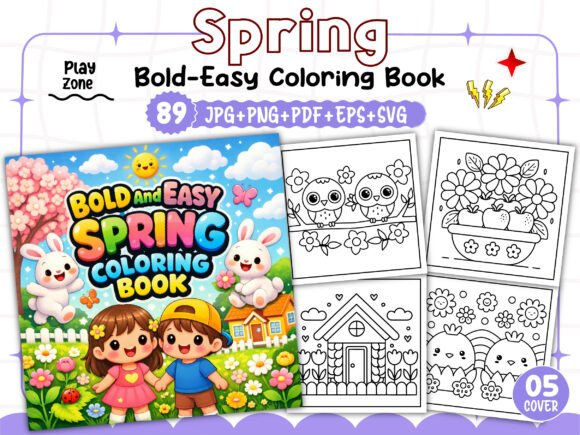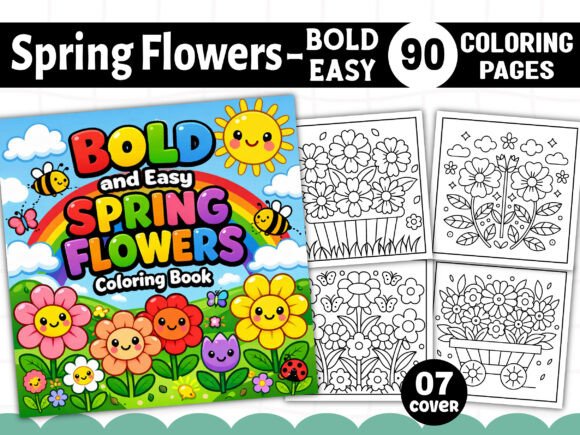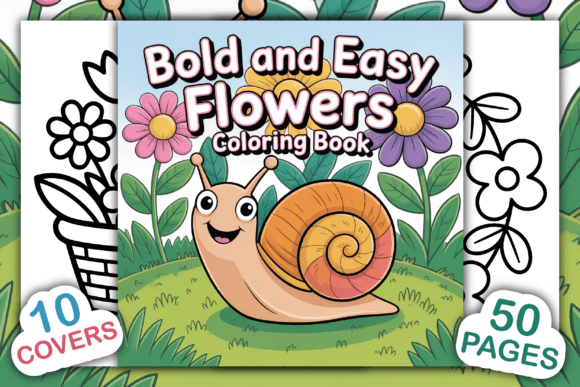
Bold and Easy Flowers Coloring Book
First Impressions: Clean, Confident, and Craft-Ready
Opening Bold and Easy Flowers Coloring Book feels like stepping into a sunlit studio—calm, intentional, and quietly joyful. The line work is strong but not rigid; the floral motifs are simplified without feeling childish or generic. There’s breathing room between petals and stems, and no fussy interior detailing that would vanish under thread or blur on textured fabric. As an embroidery designer who’s stitched hundreds of coloring-page-derived designs, I immediately noticed what’s *not* there: no micro-hatching, no overlapping fine lines, no tiny disconnected dots. That absence is a gift—it means less digitizing cleanup, fewer stitch corrections, and higher confidence when scaling for real-world use.
A Real Project Test: Embroidering a Linen Tea Towel for a Local Boutique
Last week, I prepped a small-batch run of linen tea towels for a neighborhood kitchen shop. Their customers love handmade, garden-themed home goods—but they also expect durability and visual clarity after repeated washing. I chose one central floral motif from Bold and Easy Flowers Coloring Book to adapt as a machine embroidery design. Why this one? Its open silhouette held up beautifully at 3.5" wide on hoop-stabilized medium-weight linen. The curves translated cleanly into satin stitch borders, and the negative space between blossoms gave fill stitch room to breathe—no puckering, no thread nesting. Customers didn’t just notice it—they paused, traced the outline with their fingers, and asked if it came in a matching apron. That tactile response? It starts with smart source material.
Where It Shines (and Where to Pause)
Bold and Easy Flowers Coloring Book naturally fits best in projects where legibility, charm, and gentle personality matter more than photorealism:
- Custom apparel: Works well on sweatshirt cuffs, tote bag corners, or baby onesie chest placements—especially when scaled 2.5"–4.5". The bold outlines anchor the design on knit or brushed fabrics.
- Embroidered patches: Clean edges digitize cleanly into applique design or standalone embroidered patch formats. No thin connectors or fragile loops to break during cutting or wear.
- Nursery decor & holiday gifts: The warmth and simplicity read as thoughtful—not trendy—making it ideal for baby embroidery, pillow covers, or personalized Christmas stockings.
- Digital product previews: As Graphics, these pages convert reliably into printable mockups. I’ve used them to show clients how a single floral motif might appear on a tea towel, cap front, or kitchen towel—without overpromising detail.
But—and this matters—Bold and Easy Flowers Coloring Book isn’t plug-and-play for every surface. Use caution on:
- Curved or tight-radius areas like cap fronts or toddler hat brims—simplify further or reduce scale by 15% to avoid distortion;
- Thin or highly stretchy fabrics (e.g., lightweight jersey) without proper cutaway stabilizer—the bold lines need structural support;
- Dark fabric backgrounds unless you test thread color contrast first; some lighter floral tones may need deeper thread shades to retain definition;
- Products meant for heavy laundering (like kids’ bibs or dish towels)—verify stitch density isn’t so low that fill areas look sparse after shrinkage or abrasion.
What It Adds to Your Finished Product—Beyond the Stitch
This isn’t just about whether the design embroiders cleanly. It’s about how it lands with people. A customer holding a tote bag with Bold and Easy Flowers Coloring Book embroidery doesn’t see “coloring page.” They feel intentionality. They register care in the spacing, confidence in the shape, and quiet sophistication in the restraint. That impression lifts perceived value—especially for handmade product buyers who associate clean linework with skilled curation, not just digital convenience.
For Etsy sellers and small shop owners, that translates directly to trust. When your listing shows a crisp, balanced embroidery sample—not a crowded, over-digitized mess—buyers assume consistency across your catalog. And because the motifs are versatile but not overused, they support brand consistency without locking you into one aesthetic. You can pair them with script monograms, minimalist borders, or even subtle watercolor-printed back panels.
Practical Designer Notes Before You Stitch
Before turning any page from Bold and Easy Flowers Coloring Book into a machine embroidery design or commercial embroidery project, do these six things:
- Test on scrap fabric—same weight, same weave, same wash prep as your final item;
- Check thread color contrast in natural light *and* under your shop’s display lighting;
- Review stitch density visually—if you’re digitizing yourself, avoid overloading fill areas; let the bold outline do the work;
- Confirm hoop size compatibility for your intended placement (e.g., a 4×4 hoop won’t fit a full-page motif without smart cropping);
- Inspect small details like stem tips or petal ends—some may need slight thickening to survive stitching;
- Verify licensing before selling finished items or digital embroidery files derived from it—this is a Coloring Pages asset, not a ready-to-embroider file out of the box.
One last note: try sketching the motif in black and white first. If it holds its character without color cues—if the rhythm of stems, the balance of blooms, the flow of leaves still feels resolved—then you’ve got a keeper. Bold and Easy Flowers Coloring Book passes that test, consistently. Not flashy. Not complicated. Just quietly, confidently ready for real making.